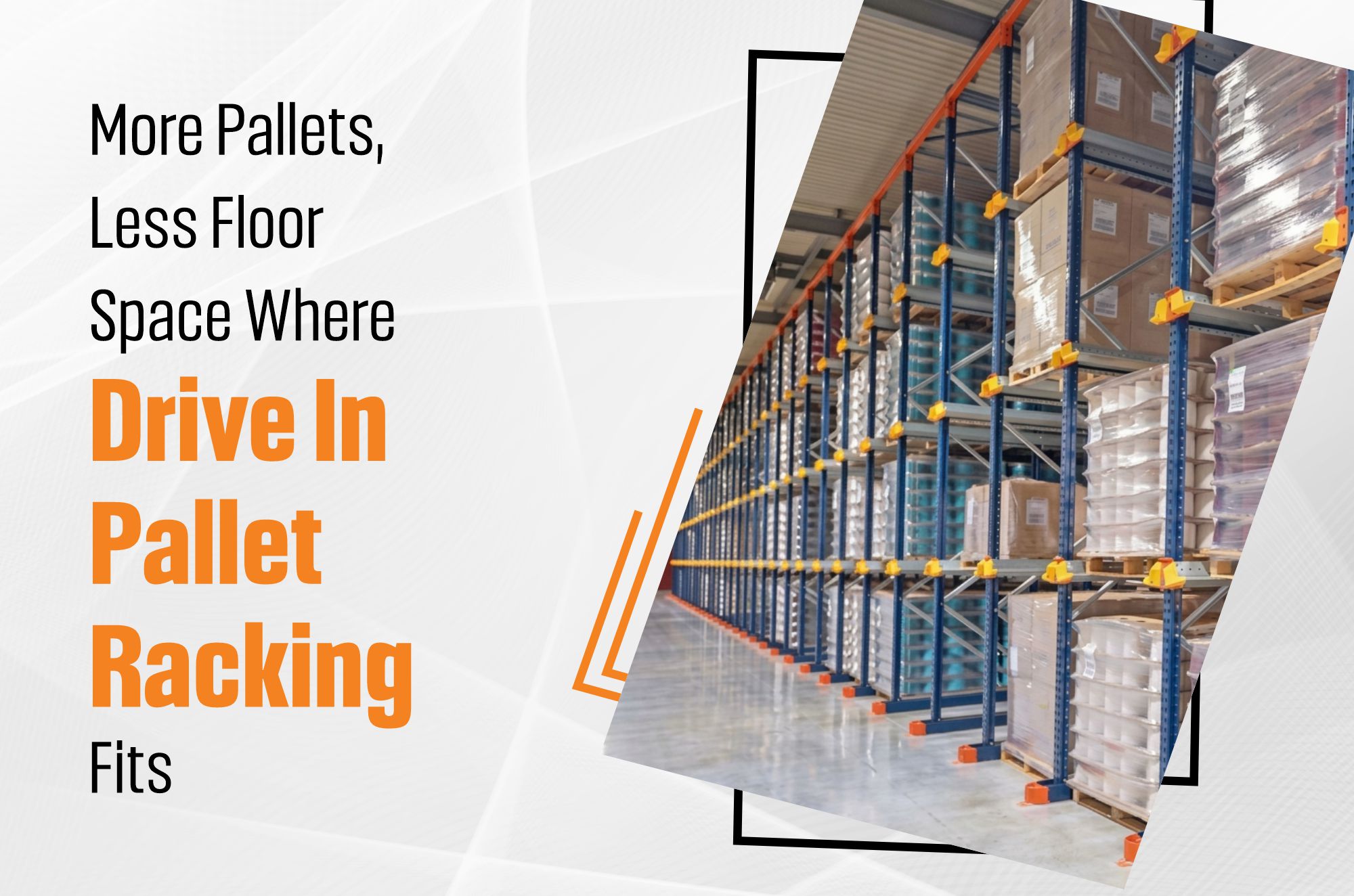
A warehouse rarely runs out of space all at once. Typically occurs at the pallet level. Once areas are estimated as stock, floor areas which were once thought to be available begin to get converted into storage areas. Aisles must be kept clear for the use of forklifts, working areas also require space and pallets can’t just be piled wherever there’s a corner that doesn’t have any pallets in it. The warehouse could also become “full” when there is still unused height and storage capacity. The warehouse can also get “full” when the space has still not been used. When a business is dealing in large amounts of palletised materials, the next step isn’t always to abandon a smaller location and relocate to a larger one. But a more appropriate question may well be: How well is the existing space being utilized? This is where drive in pallet racking can provide a way to approach it. It is designed to make it possible to store pallets in deeper lanes, which means that a single aisle for each pallet position can be eliminated.
If a warehouse’s inventory profile and handling process is appropriate, this configuration can lead to additional storage opportunities in the same warehouse space. What is important is suitability. If products need to be accessed individually and frequently, or if stock rotation is an important requirement, a system based on maximum pallet capacity might not perform well. These factors should all be taken into account when considering the use of pallets in a warehouse. This is why selecting drive in pallet racking should actually start by working through the way the warehouse is going to be used rather than just determining the number of pallets that will be required to be stored.
 Where Drive In Pallet Racking Makes the Most Sense
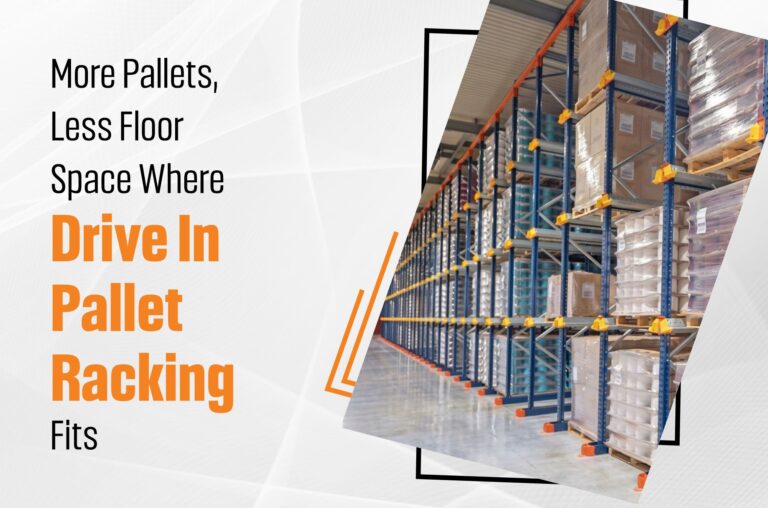
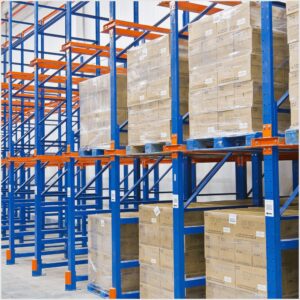
Now imagine a warehouse that has only a single product stored in large quantities. One product can be in 20 pallets, another product can be in 20 pallets and the same applies throughout the facility. In this case, assigning an individual access position to each pallet may utilize a lot of valuable aisle space. The more pallets there are, and the fewer SKUs are available, the more sense it makes to use a different storage system. Drive in pallet racking is especially well suited to this type of operation as pallets can be placed one behind the other in the rack lanes. The warehouse plan can be based on utilizing the available depth rather than a design based around access to each individual pallet.
This can be useful for businesses handling:
• Bulk inventory
• Seasonal stock
• Large batches of similar products
• Raw materials and finished goods
Cold Storage Where Floor Space Carries a Higher Operating Cost
The pattern of the inventory is equally important as the space. When a warehouse is constantly accessing a single pallet in a large number of pallets, high density storage might not be convenient enough. In a batch storage and batch movement system, the same system can be much more convenient if the products are stored in batches and moved in larger quantities. This is one of the reasons why drive in pallet racking should be used based on the flow of products and not just how many pallets a warehouse would like to store. The right application can provide additional storage in the same footprint without the use of extra land.

How the Storage Layout Changes the Equation
Two warehouses can be the same size on the floor and same pallet size and capacity can vary greatly. A lot of it is due to design. Traditional pallet storage will have clear forklift aisles between the rows of racks, thereby leaving space that is not being used for pallet storage but rather for the forklift to move about. Drive In pallet racking has deeper storage lanes that enable forklifts to access the rack and load pallets deeper within the rack. This will decrease the need for separate access aisles and may maximize the floor space and warehouse height.
This is a function of, but is not limited to, rack height, lane depth, pallet size and forklift needs. The best layout is one that is compact but doesn’t make loading and retrieval difficult. Therefore, if you are looking to invest in drive in pallet racking, you want to optimise the space you have available in the warehouse to enable a safe and efficient day to day working environment.
More Storage Capacity Does Not Always Mean Better Storage
A warehouse may be able to fit more pallets and be more difficult to run at the same time. Different priorities are storage density and pallet accessibility. Drive in pallet racking is a type of deep storage racking which may necessitate the need to move pallets in front of the back pallet to access the latter. This works very well for products such as bulk inventories, but may not be as useful if individual pallets must be accessed frequently.
In addition, stock rotation and forklift operation are important. For warehouses that have a FIFO requirement, they should ensure that the storage approach is appropriate for their operation, whereas batch based or LIFO operations may be better suited. When planning, also take into account size of the pallet, load weight, lane depth and forklift compatibility. The right drive in pallet racking system should be able to offer beneficial storage capacity while avoiding making daily storage and retrieval tasks overly complicated.
From Storage Density to a Better Fitted Racking System
It is not just the racking system that is able to store the largest number of pallets. It should be similar to the product, equipment and movement pattern of the warehouse. Drive in pallet racking can achieve high density storage for businesses with a lot of similar palletised materials, and it can help them better utilize the floor space. The approach taken at BPI Racks should start with the actual warehouse need. The appropriate configuration depends on the size of the pallets, weight of the load, available ceiling height, forklift access and stock movement. A well designed drive in pallet racking system can help maximize the use of your space, even if you don’t need to expand your facility.
Conclusion
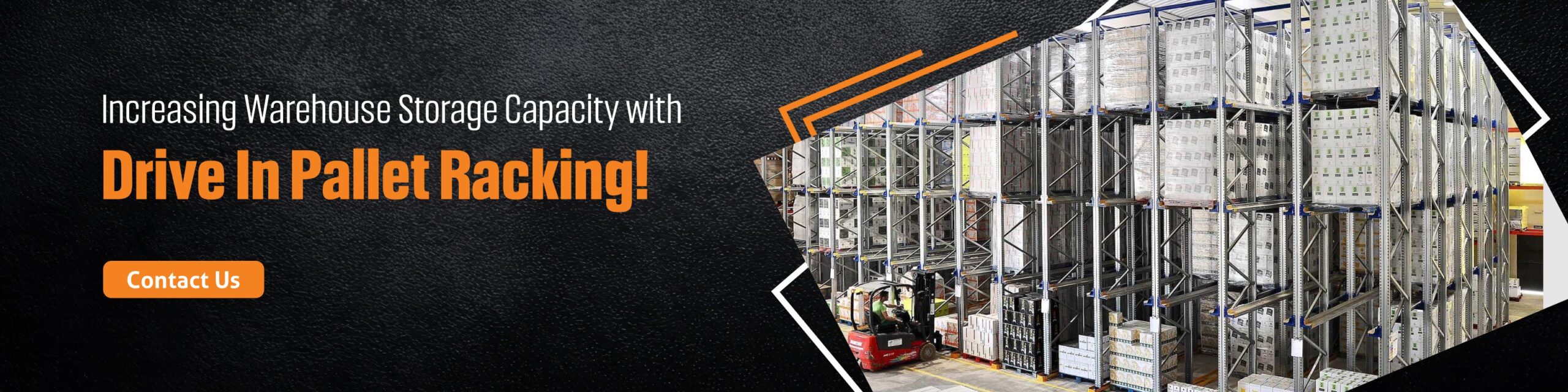
Growth in warehouses does not need to be achieved by increasing the amount of floor space available. At times the opportunity is already within the facility, just waiting for better storage. Drive in pallet racking may be a practical solution for higher storage density and better utilising available space for operations that require large volumes of palletised items. However, the proper answer is not only based on pallet capacity. This all needs to work together, as well as inventory type, stock rotation, forklift access and rack dimensions and future requirements.
An effective racking system should simplify daily warehouse tasks, rather than just fill up the space. This is why it’s important to know exactly what the facility needs before selecting the appropriate configuration. If your business requires a warehouse to enhance the storage of pallets in your current rack, BPI Racks can help assess the application and design a suitable racking solution for your business.