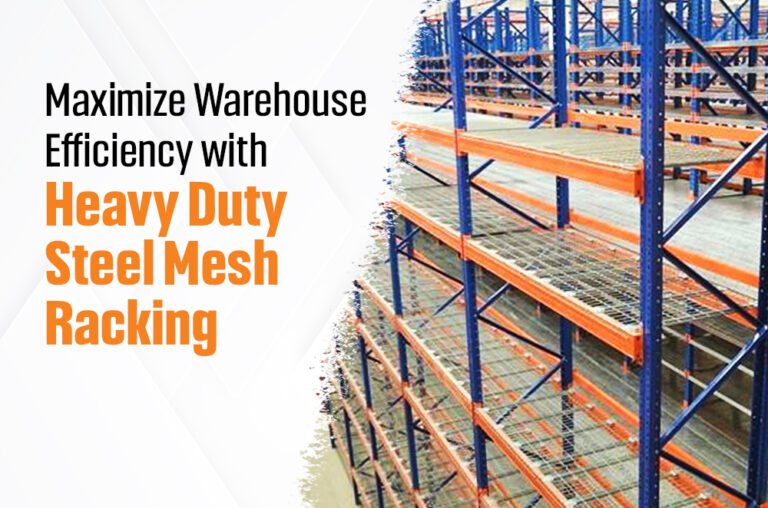
The Backbone of Organized Warehousing – Heavy Duty Steel Mesh Racking
In today’s industrial and warehousing environments, optimizing space and improving safety are more critical than ever. One of the most efficient ways to achieve both is through the use of heavy duty steel mesh racking. These systems are not only designed to withstand substantial loads but also enhance airflow and visibility, offering a practical alternative to traditional shelving. Constructed from high quality steel wire mesh, these racking systems provide both structural strength and long term reliability. Whether in logistics, manufacturing, or retail, industries now recognize that smart storage isn’t just about stacking items, it’s about enabling smooth, safe operations. As we explore the various uses, benefits, and key insights about this storage solution, you’ll see why it’s a cornerstone of efficient industrial storage. Applications of Heavy Duty Steel Mesh Racking Optimized Storage Across Industries Heavy duty steel mesh racking is used in a broad range of industries, thanks to its strength, versatility, and safety. The following sectors rely on these systems daily: 1. Warehouses and Distribution Hub Warehouses manage high volume inventories, and they need storage that can handle both weight and quantity. Steel mesh racking helps by distributing weight evenly, reducing pallet slippage, and allowing forklift access. Mesh decks improve fire safety by not obstructing sprinkler systems, unlike solid shelving. 2. Cold Storage and Freezer Units Temperature-sensitive goods, like dairy or frozen foods, require consistent airflow. Mesh racking allows cold air to circulate freely, which helps maintain stable temperatures throughout storage areas. This open design also helps prevent moisture buildup and ice formation. 3. Automotive and Heavy Equipment Storage In the automotive sector, storing heavy engines, gearboxes, and metal components demands sturdy support. Mesh racking withstands heavy pressure and offers open visibility, making it easier to manage inventory and ensure parts are stored securely without causing damage. 4. Retail Stockrooms and Wholesale Warehouses Retailers use these racks to organize bulk inventory in backrooms. The mesh design supports visual identification, making it easier for staff to find items quickly. It also reduces the buildup of dust, which is common with enclosed shelving. 5. E-commerce Fulfillment Centers For online retailers managing thousands of products, steel mesh racking brings efficiency to order picking and packing. These racks help keep SKUs organized, and the open structure enables fast retrieval, reducing order fulfillment time. 6. Industrial Production Lines Manufacturers use mesh racking to store raw materials, tools, and finished goods. In dynamic production settings, access, airflow, and durability are key, qualities that steel mesh systems deliver consistently. Advantages of Heavy Duty Steel Mesh Racking Why Businesses Prefer This Storage Solution Businesses that prioritize safety, efficiency, and adaptability choose heavy duty steel mesh racking for a number of compelling reasons. Let’s explore its core advantages. 1. Durability and Load Bearing Capacity These racks are built to hold extremely heavy loads without bending or collapsing. Made from industrial grade steel, the mesh panels provide reinforcement while maintaining a lightweight frame. This allows facilities to store heavy machinery parts or bulk pallets safely. 2. Enhanced Visibility and Inventory Control The open mesh design allows workers to see stored items from above and below. This visibility reduces human error and makes stock taking faster. When time is money, easy access to inventory makes a big difference. 3. Fire Safety Compliance Unlike solid wooden or metal shelves, mesh decks allow water from overhead sprinkler systems to pass through. In the event of a fire, this increases response effectiveness and meets most international safety codes. 4. Improved Air Circulation Closed shelves can block airflow, leading to moisture retention and potential spoilage. Mesh racking improves air movement, making it especially useful for perishable goods, chemical storage, or climate controlled areas. 5. Low Maintenance Requirements Steel mesh is rust resistant (especially when galvanized or powder coated) and does not require frequent upkeep. Unlike wood, it doesn’t warp, rot, or crack. A simple periodic cleaning is enough to keep the system in optimal condition. 6. Scalability and Customization These racking systems are modular. Businesses can easily expand their storage without having to overhaul their entire layout. The mesh panels can be adapted in size, depth, and load rating depending on specific needs. 7. Cost Efficient Over Time Though the initial cost may be higher than traditional options, the long term savings are significant. Durability, safety compliance, and reduced maintenance costs all contribute to a lower total cost of ownership. 8. Environmental Benefits Most steel mesh racking systems are made from recyclable materials. They’re eco friendly and align with sustainable business practices. Many suppliers also offer reconditioned units for those prioritizing environmental impact and cost. Quality Assurance and Design Integrity in Steel Mesh Racking To ensure high quality decision making, it’s important to understand what makes heavy duty steel mesh racking reliable from a technical and engineering standpoint. 1. Material Engineering and Construction These racks are typically constructed using high-tensile steel wires welded into a grid pattern. The frames are then either powder coated or hot dip galvanized to enhance corrosion resistance. This process ensures strength without adding unnecessary weight. 2. Design and Load Calculations Engineers use advanced CAD modeling and load simulation software to calculate racking capacities. Important variables include beam thickness, deck width, and weight distribution patterns. Certified racking systems come with documentation specifying safe load limits. 3. Compliance with Global Standards Leading manufacturers ensure their products meet standards set by bodies such as the Rack Manufacturers Institute (RMI), American National Standards Institute (ANSI), and ISO. These certifications confirm that the racking has passed rigorous testing for safety and performance. 4. Installation and Inspection Protocols Proper installation is key. Misaligned beams or uneven decking can compromise safety. Regular inspections, as recommended by safety authorities, help detect issues like weld failures or stress cracks early. Trained professionals can carry out audits every six months or annually. 5. Trusted Industry Use Cases Reputable logistics firms, cold chain operators, and multinational warehouses rely on steel mesh racking for day to day operations. Their long-term use reflects trust in the system’s reliability. Case studies often