Racks & Shelves

Supermarket Racking and Shelving
Racking

Why Supermarket Racking and Shelving Matter More Than You Think

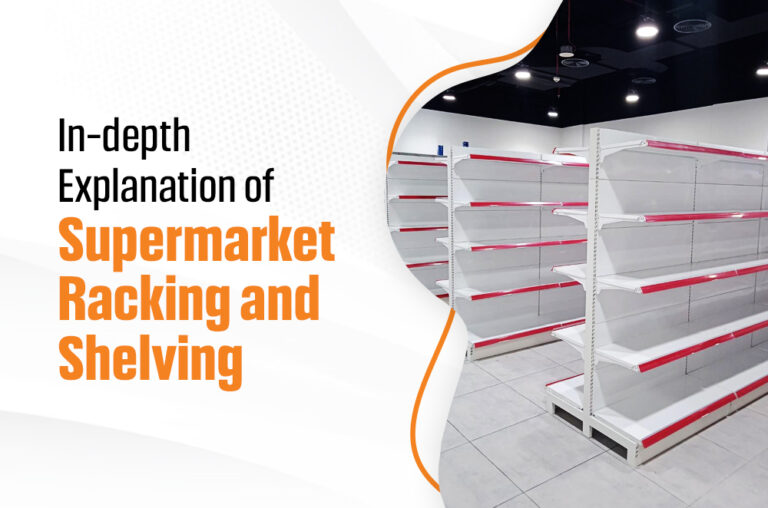
All the successful supermarkets have something in common. It is well organized, simple to navigate and to shop in. Whenever the customers move around on clean aisles and properly organized shelves, they are likely to spend more time and purchase more. Behind that smooth shopping experience lies something simple but powerful: supermarket racking and shelving. Such racks and shelves do not just contain products. They determine the movement of the shop, and they simplify the search of goods as well as assisting employees in handling stock fast. It is not only in the case of a small local store but also in the case of a huge supermarket chain that an efficient racking and shelving system is likely to influence the overall operation of the business. Supermarkets are no longer judged only by what they sell but also by how well they present it. When space is limited, smartly designed racks can make a small area look bigger and more inviting. They also improve product visibility, which directly influences purchasing decisions. In simple terms, retail store racking and shelving systems are the backbone of modern retail efficiency. They bring together organization, safety, and customer comfort, all essential for long term success. In the following sections, let’s explore how the right racking and shelving systems transform store operations and drive better results for supermarkets. How Supermarket Racking and Shelving Improve Store Operations Running a supermarket successfully is not only about stocking products but also about how efficiently they are displayed and managed. Well planned super market racking and shelving systems play a huge role in making daily operations smoother and more organized. When racks are arranged smartly, every inch of space is used wisely, and both customers and staff benefit from it. The first major improvement comes from space utilization. Every supermarket deals with a limited area, and using that space effectively determines how many products can be displayed. Racks designed with adjustable shelves help fit products of different sizes, allowing the store to display more items without feeling cluttered. Vertical shelving units also make use of wall space that might otherwise go unused. Another key improvement is product visibility. When goods are displayed clearly at the customer’s eye level, it becomes easier to notice, compare, and choose products. This visibility naturally increases sales, especially for promotional or fast moving items. Clear labeling and systematic arrangement also help customers find what they need without assistance, creating a smoother shopping experience. From the staff’s point of view, efficient racking systems enhance inventory management. Organized shelves make it easier to monitor stock levels and restock when needed. This reduces delays, keeps products fresh, and avoids overstocking or shortages. The result is a better balance between supply and demand. Additionally, proper racking design supports customer flow. When aisles are arranged strategically, movement inside the store becomes easier and safer. Shoppers spend more time browsing without feeling congested, while staff can restock or clean without disrupting customers. Modern Designs and Benefits of Supermarket Racking and Shelving Supermarkets today are not just about selling products. They are about creating an enjoyable and efficient shopping experience. Modern supermarket racking and shelving systems play a central role in achieving that goal. They combine design, strength, and practicality to make supermarkets more functional and visually appealing. One of the biggest advantages of modern shelving systems is their aesthetic appeal. Clean lines, smooth finishes, and uniform designs make a supermarket look organized and trustworthy. When customers see neat rows of well arranged shelves, it gives a sense of professionalism and care. A visually attractive store creates a positive impression and encourages shoppers to return. Another major benefit is customization. Every supermarket layout is different, and modern racking systems are designed to adapt easily. Adjustable shelves and modular structures allow staff to rearrange sections depending on product types and seasonal demands. This flexibility helps maximize display efficiency while keeping the store’s appearance fresh and updated. Durability and safety are also key advantages. Supermarket racking & shelving systems built with strong steel or coated metal can withstand heavy loads and daily wear. Their stability ensures safety for both customers and staff. Investing in high quality racks also reduces maintenance costs over time, making them a smart long term choice. Moreover, modern racks are designed for easy maintenance and hygiene. Smooth surfaces make cleaning simpler, which is especially important in supermarkets that handle food and beverages. Maintaining clean and polished shelves keeps products looking fresh and appealing to customers. With all these benefits combined, it becomes clear that super market racking and shelving is not just a structural element but a strategic investment. It influences how efficiently the store operates and how comfortably customers shop. Choosing the Right System for Long Term Performance One of the greatest decisions that any supermarket can make is the choice of a suitable supermarket racking and shelving system. The correct installation will enable the full utilization of space, the increase of visibility and the maintenance of a healthy operation. The store should as well be well organized through well structured racks that give the impression of a well organized store which customers share in confidence and comfort. Each supermarket has its style of layout and storage requirements and that is where BPI Racks comes in. These shelving units are constructed using strength, accuracy and contemporary design. All racks are put to test on durability and made out of high quality materials that are able to support daily wear and heavy weight. You have to choose compact wall shelves or huge display racks, but in any case, these solutions provide flexible variants that will perfectly fit the layout of your store. The supermarkets which settle on such racks enjoy stable long term shelving which improves the presentation of their products and also aids in the day to day operations. All the designs are aimed at stability and with ease of maintenance and also a professional finish that will provide value to the store. If you are planning
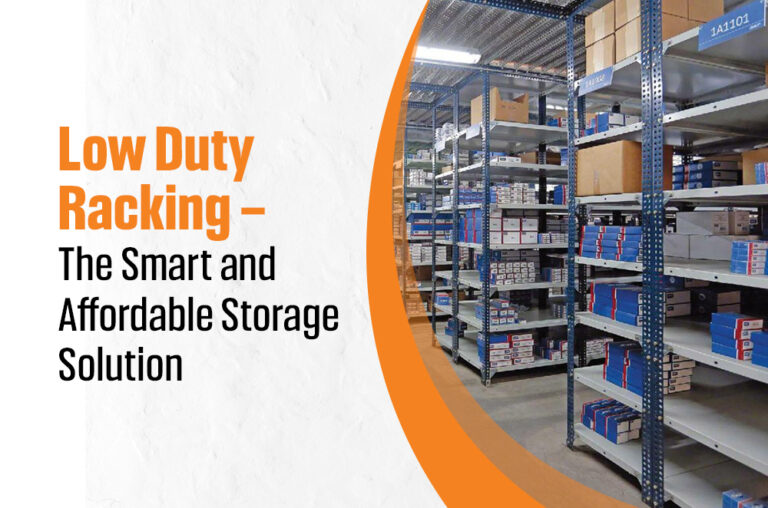
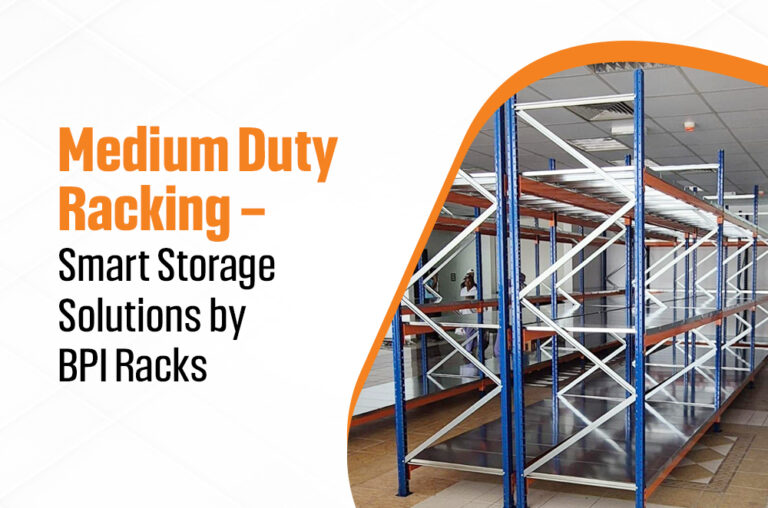
Low Duty Racking
Racking

About Our Low Duty Racking – Perfect for Light Storage Needs

Any company is aware of the hassle of lack of space. The same issue is experienced in small shops, offices and warehouses, the shelves are often cluttered and misplaced and time is wasted in trying to locate things. This is where low duty racking can be of real difference. They are also ideal in small scale arrangements since the storage systems are constructed to accommodate light loads and daily usage unlike the heavy industrial racks. The benefits of low duty racking are that companies are able to utilize the full vertical space, store items in orderly rows and establish a much flatter workflow. It is not only the issue of space saving, but the issue of simplifying the daily routine and making it more effective. These racks offer an inexpensive but convenient storage of office supplies, light tools, or packaged products. Our low duty racking systems are built to meet these needs. They are simple to install, strong enough for everyday items, and flexible enough to grow with your business. Real Storage Challenge: Common Pain Points in Small Scale Storage Small businesses often face storage problems that go beyond just running out of space. In many shops and warehouses, items are stacked randomly, shelves are overcrowded, and finding what you need can take much longer than it should. This not only wastes time but can also lead to damaged products and frustrated employees. Limited storage space can make daily operations stressful. Employees spend precious minutes looking for items, and managers struggle to keep the inventory organized. Traditional shelving or improvised storage solutions rarely solve these problems. They may hold items, but they do not help with easy access, safety, or future expansion. This is why low duty racking becomes a practical choice. It addresses these common pain points by providing a structured system that keeps items organized, easy to reach, and safe. Businesses can finally reduce clutter, prevent damage, and create a smoother workflow for everyone involved. What Is Low Duty Racking? When it comes to organizing a small space, not all racks are the same. Low duty racking is a type of shelving system designed specifically for lighter loads and everyday storage needs. Unlike heavy duty racks used in industrial warehouses, low duty racks are ideal for items like office supplies, light tools, packaged goods, or small spare parts. These racks are usually made from light steel or sturdy alloys and feature adjustable shelves that can be reconfigured as your inventory changes. Their modular design allows businesses to add or remove shelves easily, making them highly flexible for different spaces and requirements. The main goal of low duty racking is to create an organized, accessible, and safe storage solution without requiring heavy investment. With BPI Racks’ low duty racking systems, businesses get racks that are strong enough for daily use, simple to assemble, and adaptable to growing storage needs. Key Benefits of Low Duty Racking Choosing the right storage system can transform the way a business operates. Low duty racking offers several advantages that make it a smart choice for small warehouses, offices, and retail shops. 1. Makes the Most of Your Space Vertical space is often underused in small areas. Low duty racking allows you to store items on multiple levels, freeing up floor space and keeping everything organized. 2. Flexible and Adjustable These racks are designed with adjustable shelves, so you can change the height depending on the size of your items. As your inventory grows or changes, the racks can adapt without needing to buy a completely new system. 3. Affordable and Easy to Install Low duty racks cost less than heavy duty systems and do not require professional installation. Businesses can set them up quickly and start organizing their inventory right away. 4. Keeps Items Safe and Accessible By storing items properly on racks, you reduce the risk of damage and make products easier to find. Employees can access items without climbing or reaching dangerously, improving both safety and efficiency. Applications of Low Duty Racking Across Industries Low duty racking is not limited to one type of business; its versatility makes it suitable for a wide range of industries. In retail stores, these racks help keep packaged goods, stock items, and display products neatly organized while making them easy to access. Workshops and small manufacturing units use low duty racking to store tools, spare parts, and lightweight materials, creating a more efficient workspace. E-commerce businesses can benefit greatly from low duty racking as well. Sorting and storing lightweight products becomes simpler, allowing faster packing and shipping. Even offices find these racks useful for organizing files, stationery, and supplies, freeing up floor space and maintaining a clutter free environment. By providing a simple, safe, and organized storage solution, low duty racking helps businesses across industries improve efficiency, save space, and reduce operational stress. With BPI Racks, these storage systems can be tailored to match specific requirements, making them a reliable choice for almost any small scale storage need. How Low Duty Racking Solves Everyday Business Problems Daily storage is an issue that is associated with running a small business. Products are misplaced, stocks accumulate and workers spend time in locating their required products. Such minor malfunctions can get summed up, either in terms of productivity, or customer satisfaction. Low duty racking is the solution to these issues because it is a simple, and structured method of storing the everyday item. With properly installed racks, businesses can keep products and supplies in designated spaces, making them easier to locate and access. This reduces clutter and helps prevent damage to goods caused by stacking or overcrowding. It also improves workplace safety, as employees no longer have to climb or reach awkwardly to retrieve items. For small shops, offices, and workshops, low duty racking from BPI Racks offers a practical solution. By streamlining storage and keeping everything within reach, businesses save time, reduce stress, and create a more efficient workflow, allowing employees to focus on what really matters.

Medium Duty Racking
Racking

Upgrade Your Storage Requirements with Reliable Medium Duty Racking

All companies dealing with inventory are aware of the importance of a well organized storage facility. A disorganized warehouse will reduce the speed of the business, the number of errors, and even cause occupational hazards among employees. In firms where medium weight products are stored, it is important to identify a storage system that is powerful and versatile. Medium duty racking is designed to meet these needs. It provides a trade off between light storage systems of small items and heavy storage systems of very large loads. At BPI Racks, we offer storage services that assist businesses to work smarter. Our medium weight racking is durable and it is designed to simplify inventory control. Our racks will allow the businesses to save space, streamline their operations, and maintain an organized and secure storage through the use of long-lasting materials and flexible designs. Understanding Medium Duty Racking Medium duty racking is a storage system designed to hold items that are heavier than what light storage racks can manage but do not require the strength of heavy duty racks. These racks are commonly used in warehouses, manufacturing units, and distribution centers where medium weight inventory needs to be stored safely and efficiently. Typically, medium duty racks can support loads ranging from 200 kilograms to 600 kilograms per shelf. They are made from high quality steel that is often powder coated or galvanized to prevent rust and increase durability. The design is modular, which means businesses can adjust the shelf height or add extra racks as their storage needs grow. Compared to heavy duty storage systems, medium duty racking is more cost effective and easier to install. It provides a reliable solution for businesses that need strength and stability without investing in extremely heavy structures. With medium duty racking, companies can create organized, efficient, and safe storage areas. Key Features of Medium Duty Racking Medium duty racking is designed to make storage simple, safe, and adaptable. Its features ensure that businesses can organize their warehouse efficiently while protecting their inventory. One of the main features is adjustable shelves. This allows businesses to store items of different sizes on the same rack. The shelves can be moved up or down to fit boxes, tools, or other inventory items. Another important feature is its modular design. Businesses can add or remove components as their storage needs change. This flexibility helps companies grow without having to replace the entire system. Durable construction is a key advantage of medium duty racking. Made from high quality steel, the racks can withstand daily use in industrial environments. The steel is often treated with a protective coating to prevent corrosion and extend the life of the racks. Safety is also a priority. Medium duty racks come with secure beams and reinforced joints to prevent accidents. Anti slip surfaces help keep items in place, giving warehouse staff peace of mind. Finally, these racks are designed for easy assembly. Most systems can be set up quickly without requiring specialized tools or professional installation, saving time and labor costs. These features make medium duty racking a reliable and practical choice for businesses that need organized, efficient, and safe storage. Advantages of Medium Duty Racking for Businesses There are some benefits of medium duty racking that make it an invaluable investment in any warehouse/storage facility. The primary advantage is the effective use of space. Vertical storage can help the businesses utilize the available floor space. This enables to store more items in the same area hence keeping the warehouse well arranged and less cluttered. Better inventory control is another benefit. The neatly arranged shelves help employees find the items fast enough, eliminating errors made whilst picking and packing. This also assists in the monitoring of stock, in that there is invariably an up-to-date stock in the inventory. Medium duty racking also reduces handling time. Items are stored at accessible heights, which makes loading and unloading faster and safer for staff. This improves overall productivity and allows operations to run smoothly. Cost effectiveness is another key benefit. Medium duty racks provide strength and durability without the high price of heavy duty systems. They are a practical solution for businesses that need to store medium weight inventory without overspending. Finally, medium duty racking offers scalability. As a business grows, additional racks and shelves can be added without the need for a complete overhaul. This flexibility makes it a long term solution that adapts to changing storage requirements. For businesses looking for an organized, efficient, and reliable storage solution, medium duty racking provides all the essential benefits needed to enhance warehouse operations. Industries Benefiting from Medium Duty Racking Medium duty racking is versatile and can meet the storage needs of a wide range of industries. In e-commerce and retail warehouses, these racks help organize products such as packaged goods, electronics, and clothing. This makes it easier to manage inventory and fulfill orders quickly. In manufacturing units, medium duty racking is ideal for storing components, tools, and semi finished products. Workers can access materials efficiently, which helps maintain a smooth production workflow. Distribution centers also benefit from medium duty racks. Organized shelving allows for faster order processing and reduces the risk of misplaced items. This contributes to more accurate deliveries and better customer satisfaction. Even specialized industries such as pharmaceuticals and cold storage can use medium duty racking. Non-heavy medical supplies and packaged products can be stored safely in a systematic manner, ensuring both safety and efficiency. Overall, medium duty racking provides flexible storage solutions for businesses of all sizes. It supports organized operations, reduces handling time, and enhances productivity across different sectors. BPI Racks Medium Duty Racking Solutions At BPI Racks, we provide medium duty racking solutions that are designed to meet the unique needs of businesses. Our racks combine durability, flexibility, and safety to create storage systems that improve efficiency and organization. Our medium duty racks are made from high quality steel with protective coatings to ensure long lasting performance. The modular design allows businesses

Cantilever Racking
Racking

Guide to Cantilever Racking for Diverse Storage Requirements

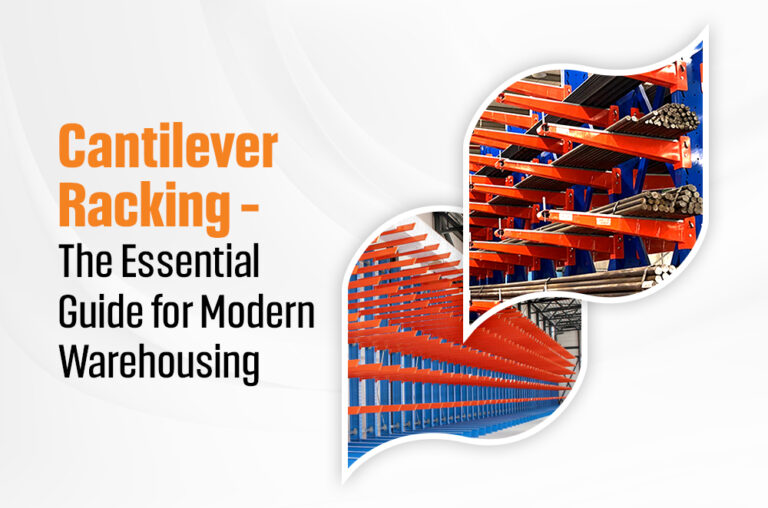
Every successful warehouse or storage facility depends on how well space is used. A cluttered setup not only slows down daily operations but also increases the risk of damage and accidents. This is why businesses invest in racking systems that bring structure and order to their storage areas. For many products, regular shelves or pallet racks are enough. They keep items organized and easy to reach. The challenge begins when companies need to store materials that are long, heavy, or uneven in shape. Stacking these items on standard shelves often wastes valuable space and makes handling unsafe. This is where cantilever racking plays an important role. Instead of closed shelving, it uses arms that extend outward, allowing long or bulky goods to rest securely. Whether it is metal pipes, timber, or furniture parts, this system offers a practical way to keep such items organized. For businesses looking to improve efficiency, learning about cantilever racking is a good starting point. What is Cantilever Racking? Cantilever racking is a storage system created for items that are too long or bulky to fit on traditional shelving. Instead of fixed compartments, it has a structure made of vertical columns with arms that stretch outward. These arms act as supports, holding goods securely while leaving the front open for easy loading and unloading. The system is simple in design but highly effective. A typical setup includes a strong base, upright columns, arms, and horizontal bracing that gives stability. Materials rest on the arms, which can be adjusted in height depending on the size of the goods. This flexibility makes cantilever racking useful for many industries where products come in different lengths and weights. There are two main styles to consider. Single sided cantilever racking is placed against a wall and is ideal for smaller spaces. Double sided cantilever racking allows storage on both sides of the column, which makes better use of open floor areas. Businesses can choose either type depending on their storage needs. By using this system, companies gain a practical solution that saves space and makes handling easier. It is one of the most effective ways to store products like pipes, beams, or wooden planks without creating clutter. Advantages of Cantilever Racking One of the biggest advantages of cantilever racking is the way it makes warehouse space more efficient. Since the design has no front columns, workers can load and unload goods without obstacles. This open access not only saves time but also reduces the risk of damage when handling long or heavy products. Another strength of this system is flexibility. The arms can be adjusted or extended to suit different types of materials, from light aluminum pipes to heavy steel beams. Businesses that deal with goods of varying lengths benefit from this adaptability, as it allows them to store everything in one organized system. Durability is also a key feature. Cantilever racking is built from strong steel structures that can handle heavy loads for long periods. With proper installation and regular checks, it can serve reliably for many years. Safety is equally important, and this system helps reduce hazards in the workplace. By keeping long items off the floor and properly supported, it lowers the chance of accidents and creates clear pathways for workers and equipment. Finally, scalability makes cantilever racking stand out. As a business grows, more arms or extensions can be added to meet new storage demands without replacing the entire setup. This makes it a cost-effective choice in the long run. Common Uses Across Industries Cantilever racking is widely used across industries because of its ability to handle long, heavy, or awkwardly shaped items. In construction, it provides safe storage for steel pipes, timber beams, and metal bars that are difficult to stack on regular shelving. Furniture makers use it for panels, boards, and frames that vary in size, while automotive and machinery companies rely on it for sheet metal, shafts, and tubing. In each of these cases, the open arm design makes loading and unloading easier while keeping the warehouse floor clear. Distribution centers and large warehouses also depend on cantilever racking for managing bulky stock that does not fit neatly on pallets. From outdoor equipment to household products, it offers a flexible way to store goods of different dimensions. This versatility makes it a trusted choice across multiple sectors where efficiency, safety, and space optimization are essential. Choosing the Right Cantilever Racking System Understanding what kinds of materials your company deals with is the first step in choosing the best cantilever racking system. Because heavy steel beams or large timber sections require heavy duty designs, while lighter products might only require a medium duty system, load capacity is an important consideration. Your warehouse’s ceiling height and available floor space are also crucial factors. Double sided racks are perfect for open spaces where storage can be maximized on both sides, while single-sided racks are good against walls in smaller spaces. Safety and future growth should also guide your decision. A well designed system must follow quality standards, include proper bracing for stability, and allow for easy inspection. At the same time, businesses should think ahead by choosing racks that can be expanded or adjusted as storage needs grow. Working with a trusted supplier ensures that your cantilever racking system is both reliable and scalable, giving long term value to your operations. Cantilever Racking Solutions from BPI Racks UAE For businesses in the UAE looking to upgrade their storage systems, BPI Racks offers reliable cantilever racking solutions that are built to perform. Our racks are designed to handle heavy duty materials such as timber, steel pipes, and furniture parts while ensuring safety and efficiency in your warehouse. At BPI Racks, we understand that every business has unique requirements. That is why we provide both single sided and double sided cantilever racking systems, tailored to fit the available space and the type of goods you manage. With a focus on durability, flexibility, and long term value, our racking

Mezzanine Floor GI Grating
Racking

Innovative Storage Expansion with Reliable Mezzanine Floor GI Grating

Many industrial and commercial facilities can exploit the space without compromising on its safety and durability. The mezzanine floors have been a life-saving solution to the business which needs to maximize vertical space without interfering with the structural integrity. Among the many flooring materials, Mezzanine Floor GI Grating assures warehouse, factories and storage units with quality. Galvanized Iron grating combines strength with corrosion resistance, making it ideal for heavy duty applications. Its open design allows better airflow and lighting, enhancing safety and operational efficiency. Installing GI grating on mezzanine floors not only ensures robust support for heavy loads but also simplifies maintenance and future modifications. For businesses looking to enhance storage capacity and workflow, choosing the right mezzanine floor material is crucial. What is Mezzanine Floor GI Grating Mezzanine floor GI grating is a type of flooring made from Galvanized Iron, widely used in industrial and commercial spaces where strength, durability, and safety are crucial. Unlike traditional solid floors, GI grating consists of interconnected metal bars that form a strong yet lightweight framework capable of supporting heavy equipment, storage racks, and foot traffic. One of the main advantages of GI grating is its resistance to corrosion, making it suitable for environments exposed to moisture, chemicals, or temperature changes. Its open design allows air circulation and light to pass through, improving visibility and reducing dampness. Compared to concrete or timber flooring, GI grating offers faster installation and easier maintenance, allowing businesses to adjust or expand mezzanine levels without major structural changes. By choosing GI grating, companies ensure a long lasting, safe, and efficient flooring solution for their mezzanine spaces. Advantages of Using GI Grating in Mezzanine Floors This method of flooring offers numerous advantages that make it a preferred choice for warehouses, factories, and commercial spaces. Its strength and durability allow it to support heavy loads, including storage racks and industrial equipment, without bending or compromising safety. Galvanized iron provides excellent resistance to rust and corrosion, making it suitable for areas exposed to moisture, chemicals, or temperature fluctuations, while also reducing maintenance costs over time. In addition to durability, GI grating is a cost effective solution compared to concrete or timber flooring because it has a longer lifespan and requires less upkeep. Its open grid design enhances workplace safety by preventing water or dust accumulation and providing good traction for employees. The versatile nature of GI grating also allows it to be easily integrated with existing mezzanine structures, racks, and platforms, enabling businesses to expand or modify storage areas without extensive construction work. By combining these benefits, it delivers a reliable, efficient, and safe flooring solution for industrial and commercial facilities. Applications of Mezzanine Floor GI Grating This type of floor is widely used across industries due to its durability, versatility, and ease of installation. It is particularly effective in spaces where maximizing storage and maintaining safety are top priorities. Warehouses and Storage Facilities In warehouses, GI grating supports heavy storage racks while allowing visibility and airflow between levels. This ensures efficient space utilization and better inventory management. Manufacturing Units Factories and production facilities benefit from GI grating mezzanine floors because they can withstand the weight of machinery and equipment. The open design also prevents accumulation of dust and debris, helping maintain a clean working environment. Industrial Plants Industrial plants that handle chemicals or liquids often face corrosion challenges. Galvanized iron grating provides resistance against rust, making it suitable for such demanding environments. Commercial Spaces Businesses with limited floor space, such as showrooms or retail storage areas, can create additional storage levels without major construction. GI grating mezzanine floors are lightweight and can be installed quickly to meet changing operational needs. Multi Level Racking Integration GI grating works seamlessly with modular racking systems. This allows businesses to design multi tier storage solutions that improve workflow and optimize space. Why Businesses Prefer GI Grating Over Traditional Flooring Companies are turning to the use of GI grating as a mezzanine floor due to its obvious benefits over the old fashioned floors such as concrete or timber floors. GI grating can hold a lot of weight but be light and thus instead of having stress on the structures used to support it it can be installed quickly and easily. GI grating can be installed at a comparatively short time period, unlike in the traditional construction where the flooring material would take a long time to be constructed and had to cure before it could be used, meaning that businesses could use the mezzanine area earlier. It has corrosion resistant features that make it to be low maintenance and long term performing which scales down the cost of operation. GI grating is modular, meaning that damaged areas can be changed one at a time without altering the rest of the floor, which provides further flexibility in case of expansions or layout adjustments. Besides that, the free grid construction design improves ventilation and lighting, which makes the working environment less damp and less unsafe to the employees. The advantages of Mezzanine Floor GI Grating compared to the traditional flooring products are that it is an economical option with benefits and write offs and is a sensible alternative to concrete flooring solutions. How Mezzanine Floor GI Grating Enhances Storage Efficiency Selecting the right material for a mezzanine floor is essential to ensure safety, durability, and long term performance. It is important to consider the load requirements, including the weight of storage racks, equipment, and foot traffic, to ensure the flooring can handle maximum stress without bending or warping. Environmental factors such as humidity, chemical exposure, and temperature fluctuations should also be evaluated, as galvanized iron provides excellent resistance to corrosion under demanding conditions. Proper installation is critical for long lasting results, with a sturdy support structure and secure fastening helping to prevent hazards. Partnering with a trusted supplier can make the selection and installation process easier. BPI Racks offers high quality GI grating and compatible racks, providing UAE businesses with reliable materials, expert guidance, and after

Pallet Racking System
Racking

Enhance Warehouse Efficiency with Modern Pallet Racking System

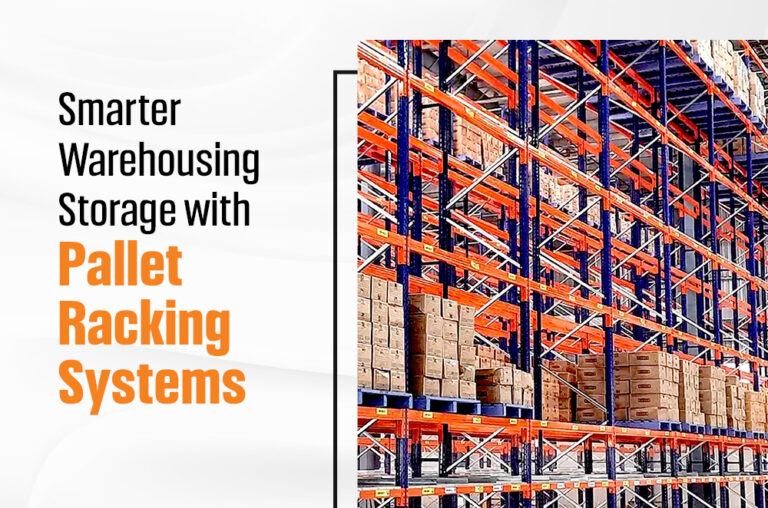
Enter any busy warehouse and you will be met by one challenge. Space does not appear sufficient. Pallets are piled up, employees are rushing about and all sides are crowded with the stuff that is to be shipped or stored. Such an atmosphere can hardly afford to keep things organized and save space. A pallet racking system is the framework that facilitates this. It enables companies to store more within the same space, protect their products and to ensure that employees do not waste time in getting whatever they require. It has turned into an indispensable solution to companies aiming at both order and efficiency. What Makes a Pallet Racking System Essential Each warehouse has a style of managing storage, but when the layout is in favor of speed and safety, then the difference is genuine. A pallet racking system does both. Rather than piling up the stock in the floor it makes a vertical arrangement in which all the pallets can be found. This does not only leave clear space but also avoids delays in movement of forklifts and workers. The outcome is the ease of flow of activities, reduction in accidents, and proper utilization of the building itself. Companies that used to have trouble with clutter will discover that a strategically laid out racking system transforms how they carry out their day to day operations. Different Types of Pallet Racking Systems for Businesses Every business handles storage in its own way, and the choice of racking plays a big role in how smooth operations can be. Among the many designs available, three types stand out for their strength, flexibility, and ability to handle large volumes of goods. Heavy Duty Racking This system is built to carry bulky and weighty items that ordinary shelves cannot manage. Heavy duty racking uses high strength steel frames and beams that can hold thousands of kilograms per level without bending. Industries that deal with machine parts, automotive spares, or industrial equipment often prefer this system because it combines strength with safety. The open design also makes it easy for forklifts to load and unload goods, keeping productivity high while protecting valuable inventory. Multitier Racking When a warehouse needs both storage space and easy accessibility, multitier racking is a practical choice. It creates multiple levels of racks within the same warehouse, connected by walkways or staircases. This design allows staff to reach goods directly without depending only on forklifts. Businesses that manage a wide range of stock keeping units, such as retail distribution or e-commerce, benefit from multitier systems because they provide high density storage and clear organization. The system uses vertical space to its maximum potential, turning one floor area into a structured multi level storage zone. Drive In Pallet Racking For companies that need compact storage of large volumes, drive in pallet racking is one of the most efficient solutions. Forklifts can move directly inside the racking lanes to place or retrieve pallets, which reduces the number of aisles required. This system is excellent for last in, first out operations where stock rotation is less frequent. Cold storage facilities, beverage companies, and bulk product manufacturers often rely on drive in systems because they can store more pallets in less space while keeping everything secure. Advantages of Using a Pallet Racking System While the different types of pallet racking systems serve specific needs, they all bring a set of common advantages that make them essential for modern businesses. The first and most obvious benefit is space optimization. Instead of filling the floor with stacks of pallets, goods are placed vertically, freeing up valuable room for other operations. This makes it possible to store more products in the same facility without costly expansions. Another key advantage is workflow efficiency. When every pallet has a designated place, warehouse staff can locate items quickly and handle orders faster. This reduces downtime and allows companies to process more shipments in less time. For industries that rely on fast turnaround, such as e-commerce or retail distribution, the time saved can be the difference between satisfied customers and missed opportunities. Safety is equally important. Without structured racks, pallets are often piled on top of each other in unstable stacks. This creates risks for workers and increases the chance of damaged goods. A pallet racking system eliminates these risks by securing every load within a strong steel framework. Many systems also include safety accessories like locking pins, guards, and load limit signs to further protect both staff and inventory. Financial benefits also play a big role. Even though installing a pallet racking system requires investment, the return is clear. Businesses save on warehouse space, reduce product losses, and improve order fulfillment. Over time, these savings add up, making the system cost effective in the long run. Finally, pallet racking systems bring flexibility and scalability. As businesses grow, racks can be extended, rearranged, or upgraded to meet new storage demands. This means the system continues to provide value even as operations expand. In short, the advantages cover every aspect of warehouse management: better use of space, safer operations, faster workflows, and reduced costs. It is a complete solution that supports both daily tasks and long term growth. Custom Solutions from BPI Racks All businesses possess a different method of storing and transiting goods. And that is why a one size fits all strategy does not often work. Designing pallet racking at BPI Racks is based on the precise needs of our clients. In case of heavy industrial products, we offer robust and sturdy racks capable of holding up heavy loads confidently. On light goods we use flexible designs which increase pick and stocking speed. We also research the structure of every warehouse to develop a system that enhances the movement and space savings. Our racks are designed to make the workplace more orderly, safe and efficient no matter the size of the distribution center or the small storage area. Why Choose BPI as Your Pallet Racking Supplier Selecting the right

Warehouse Racking and Shelving
Racking

Introduction to Our Warehouse Racking and Warehouse Shelving

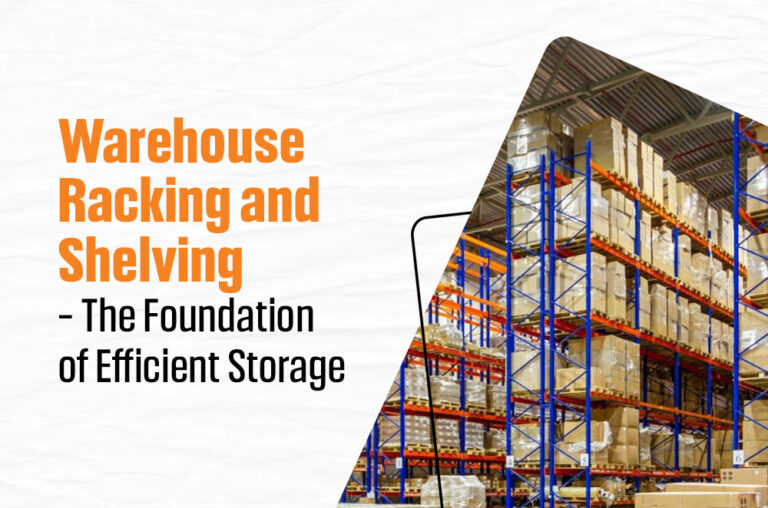
Space constraint and storage challenge applies to all the warehouses of any size. The most appropriate use of space available. As a business expands and their product line increases; then effective storage is necessary to help their operations run smoothly. Warehouse racking and shelving come in here. These systems make a messy storage space into a neat space where products can be stored, located, and moved easily. The appropriate storage solution is not just a convenience to companies in the UAE and elsewhere. It enhances safety, reduces cost and completes orders more quickly. BPI racks has been helping businesses to attain equilibrium by providing strong, strong and admirable geared up storage systems which can be installed in any business sector. What is Warehouse Racking and Shelving? At its core, warehouse racking and shelving is about creating structured storage systems that maximize space and improve efficiency. While both terms are often used together, they serve slightly different purposes. Racking systems are heavy duty structures designed to hold large pallets, bulky goods, or items that require forklifts for movement. These systems are designed to provide durability, stability, and vertical capacity, which makes them suitable for warehouses that handle large volumes. Shelving systems, on the other hand, are meant for smaller, lighter items that need frequent manual access. Their simple installation, adaptability, and suitability for facilities that rely on manual product picking make them highly practical. When combined, these two systems provide a complete storage solution. Racking ensures the safe storage of heavy materials, while shelving keeps smaller products within quick reach. Together, they help businesses manage inventory more effectively and ensure smooth day to day operations. Evolution of Storage Systems Warehouses have existed for centuries, but the way goods are stored has changed dramatically. In the past, businesses relied on simple floor stacking or wooden racks to keep their products. These methods were not efficient and often led to wasted space, poor organization, and even product damage. As industries expanded and trade increased, warehouses needed better systems. That is when steel racking and modular shelving solutions became popular. These modern systems allowed companies to use vertical space, improve product accessibility, and keep their inventory more secure. Today, warehouse racking and shelving has become an essential part of logistics and supply chain management. Businesses no longer see storage as a secondary activity. Instead, they view it as a critical factor in improving workflow, saving time, and reducing operational costs. Types of Warehouse Racking Systems Different warehouses have different needs, which is why there are several types of racking systems available. Selecting the right option depends on the nature of the products, the warehouse space, and the overall workflow needs. Selective Racking This is the most common type of racking system. It provides direct access to every pallet, which makes it simple to manage inventory. Selective racking is highly flexible, cost effective, and easy to install. It is an excellent choice for warehouses that handle a wide variety of products. Drive In and Drive Through Racking Drive in and drive through systems allow forklifts to enter the racking lanes to place or retrieve pallets. These systems maximize floor space by reducing aisles. They are ideal for businesses storing large quantities of similar items that do not require frequent rotation. Pallet Flow Racking Pallet flow racking uses gravity rollers to move pallets from one end of the rack to the other. It supports a first in, first out (FIFO) inventory system, which is useful for products with expiration dates or seasonal demand. Cantilever Racking Cantilever racking is built to store lengthy, bulky, or unevenly shaped items like pipes, timber, and steel rods. Its projecting arms allow oversized goods to be loaded and unloaded with ease. Each of these racking systems improves storage efficiency in different ways. When chosen carefully, they can help businesses save both time and space. Types of Warehouse Shelving Systems While racking systems are designed for heavy pallets and large items, shelving systems focus on smaller products that need manual handling. They make warehouses more organized and help workers pick items quickly and safely. Industrial Shelving Industrial shelving is designed to support substantial weights and endure demanding environments. It is commonly used in warehouses that store tools, spare parts, and other durable goods. Its strong steel construction makes it long lasting and reliable. Mobile Shelving Mobile shelving is a space saving solution. The shelves are mounted on movable bases that slide along rails. This eliminates the need for fixed aisles and allows warehouses to store more products in the same area. It is often used in industries where floor space is limited. Boltless Shelving Boltless shelving is easy to assemble and reconfigure without tools. It is a flexible solution for warehouses that need frequent adjustments to their storage layout. Businesses that deal with fast moving consumer goods often prefer this type of shelving. By combining different shelving systems, warehouses can achieve both accessibility and efficiency. The right shelving choice ensures that workers spend less time searching for products and more time focusing on productivity. Key Benefits of Warehouse Racking and Shelving Investing in proper warehouse racking and shelving offers a wide range of advantages that directly improve warehouse operations. These systems maximize storage capacity by utilizing both horizontal and vertical space, allowing businesses to store more inventory without expanding their premises. They also improve workflow efficiency since organized racks and shelves help workers locate products faster, which reduces downtime and speeds up order fulfilment. Safety is another important benefit, as strong racking and shelving systems keep products secure and reduce the risk of workplace accidents that often occur with poorly stacked goods. Although the installation requires an initial investment, it quickly proves cost effective by lowering rental expenses, minimizing product damage, and improving long term durability. Additionally, these systems are highly scalable, which means companies can expand or reconfigure them as their business grows. Together, these benefits show that warehouse racking and shelving are not just storage tools but essential systems

Two Tier Racks
Racking

How to Use Two Tier Racks In The Right Way For Efficient Storage

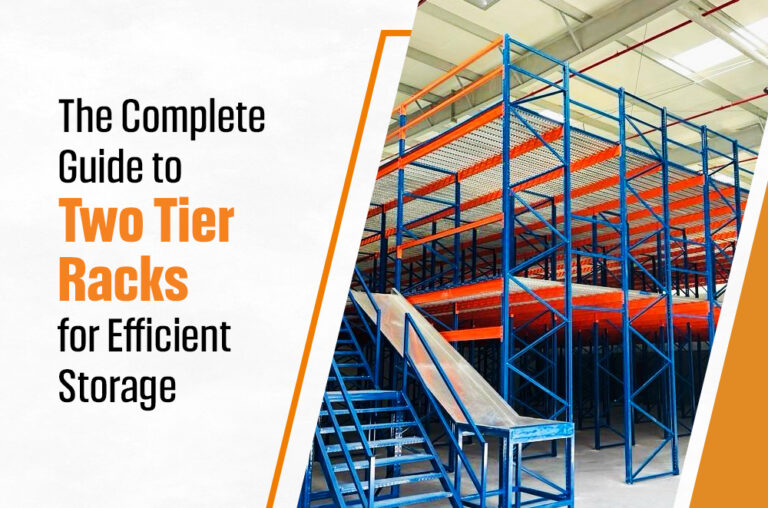
Efficiency in storing products has always been a challenge to all the industries that deal with large quantities of a product. It is not uncommon to see a warehouse becoming overwhelmed very rapidly, but it is also not uncommon to find that those warehouses hit their floor space limits due to land prices and the costs of expansion. Meanwhile, businesses are always pressured to offer their services faster and maintain their operations in order. These demands have prompted a lot of firms to embrace smarter storage practices that lay emphasis on the utilization of the already available space. The increase of a two tier rack has emerged as one of the most realistic alternatives over the past years. This system utilizes the unutilized vertical space within warehouses and hence the business still has a means of storing more goods without the construction. When placing a second shelving level companies are nearly able to increase the capacity of the shelf and products can be located easily. For businesses struggling with space limits, two tier racks provide a balance between efficiency and affordability. Instead of adding new facilities, they make better use of what is already available. This approach has changed how warehouses, retail chains, and manufacturing plants think about storage, making vertical solutions an essential part of modern supply chain design. Evolution of Storage Systems Storage methods have come a long way from the days of simple floor stacking, where goods were piled in open areas with little organization. As industries grew, single racks became the standard, offering more structure and easier access, yet they still left large portions of vertical space unused. The demand for higher efficiency led to the rise of multi tier racking systems, which transformed warehouses by unlocking capacity in the same footprint. Today, many industries are shifting toward two tier racks because they deliver the perfect balance of space utilization, flexibility, and cost efficiency without heavy construction. Understanding Two Tier Racks A modern warehouse is no longer defined by how wide it spreads but by how well it uses every meter of available space. This is where two tier racks stand out as a smart choice. They are designed to create an additional level of storage within the same footprint, giving companies the chance to expand upward instead of outward. These systems usually rely on strong steel frames capable of supporting heavy loads. Each level can be accessed through staircases or walkways, which makes handling goods safe and practical. Rather than leaving the vertical area unused, the structure transforms it into practical storage space. When compared to single-level shelving, this approach nearly doubles the storage capacity. Unlike mezzanine floors that demand permanent construction, two-tier designs stand out for their flexibility. They can be reconfigured or extended as a business grows, making them a suitable option for industries where demand changes frequently. Many companies adopt this setup after facing limited floor space and high rental costs. Rather than moving to a larger facility, they increase their efficiency inside the same building. By using the warehouse height more intelligently, they reduce waste and make everyday operations smoother. Key Benefits of Two Tier Racks The main advantage of two tier racks is their ability to maximize vertical space. Many warehouses have high ceilings that remain unused while the ground area becomes crowded. Adding a second tier of shelving allows businesses to nearly double their storage capacity without needing to enlarge the building. This efficient use of height is often the difference between meeting customer demand and running out of room. Cost savings add to their appeal. Constructing a new facility or extending an existing one can take months and require significant investment. With this storage method, companies can upgrade their capacity at a fraction of the cost. Installation is quicker, and daily operations face only minimal disruption. Another important benefit is safety. These racks are engineered to hold heavy loads securely. Walkways, staircases, and railings allow workers to move safely between levels. Compared to unplanned stacking on the floor, the structured design reduces risks of accidents and protects both employees and goods. Flexibility also makes the system valuable. Businesses often face seasonal demand shifts or changes in product size. Two tier racks can be adjusted or expanded when needed, unlike permanent mezzanine floors. This adaptability ensures that the investment continues to deliver value as the company grows. Lastly, better organization improves overall performance. Goods are arranged systematically, which makes locating items faster and reduces errors in inventory management. Shorter picking times translate into quicker deliveries and higher customer satisfaction. Two tier racks provide a dependable solution for companies striving to enhance both speed and accuracy. Applications Across Industries Two tier racks are invaluable in various industries where space and efficiency is a vital factor. Warehousing and logistics businesses deal with thousands of merchandise a day and availability is another major requirement. By using this storage system, they will be able to add capacity without losing reach of the items to facilitate speedier shipping and streamlined supply chain functions. The retail business sector is another beneficiary of the technology. Large chains usually need to store cartons and large bulk contacts in the backrooms or distribution centers. Multi level shelving helps stores keep additional stock right near the range and produce extra stock rapidly on the shelves as the customer demand escalates. This systematic behavior avoids any cases of delays and enhances service delivery. Manufacturing units rely on two tier racks for both raw materials and finished goods. Keeping inputs accessible reduces downtime on the production line, while finished products can be stored neatly until they are shipped. The structured design ensures that inventory moves in and out without confusion, which is especially important in facilities with high daily output. Specialized industries such as cold storage facilities find unique advantages as well. Vertical storage helps maximize space in temperature controlled rooms, which lowers energy costs per unit stored. This is crucial when handling perishable goods that must remain in precise

Shuttle Racks
Racking

Shuttle Racks: The Smart Way to Enhance Warehouse Operations

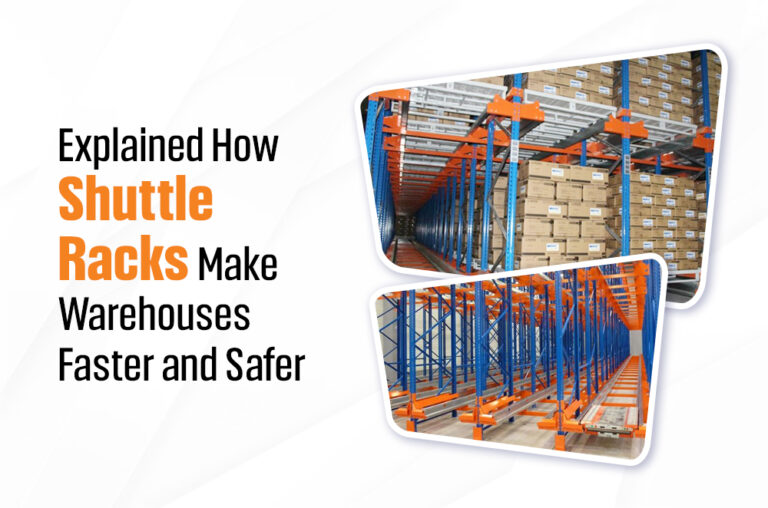
Warehouses today are under constant pressure to store more products, move goods faster, and still maintain accuracy. With supply chains becoming more complex, the traditional storage methods that worked a decade ago often fall short. Companies now need solutions that not only save space but also streamline the movement of goods from one point to another. Among the modern options, shuttle racks have become a preferred choice for businesses looking to increase efficiency without expanding their floor area. These systems allow warehouses to store a higher number of pallets, reduce dependency on manual labor, and improve overall safety. For organizations where time and space are both valuable, this innovation is proving to be a game-changer. What are Shuttle Racks? In simple terms, shuttle racks are high-density storage systems designed to maximize warehouse space while reducing the time spent on pallet handling. Instead of forklifts driving deep into the storage lanes, a motorized shuttle car takes over the job of moving pallets inside the rack structure. This shuttle is controlled through a remote or automated system, making operations faster and safer. The setup usually includes a racking framework, rails for the shuttle to move on, and the shuttle car itself. Operators only need to place the pallets at the entry point of the rack; from there, the shuttle takes over. It can position the pallet in the designated spot with accuracy and bring it back out when required. This system is not just about convenience, it redefines how warehouses organize and manage their goods. By reducing the need for forklifts to enter every aisle, shuttle racks also help minimize congestion and lower the risk of accidents. Evolution of Warehouse Storage Systems For years, warehouses relied on selective pallet racks as the most common method of storage. While this approach made it easy to access individual pallets, it consumed a large amount of space. As demand grew, businesses turned to drive-in and drive-through racks, which offered higher density but came with their own challenges. Forklifts had to enter narrow lanes, which slowed down movement and created safety concerns. The limitations of these systems became more visible as supply chains expanded. Warehouses needed to handle larger volumes, process orders quickly, and use every inch of available space. To achieve higher efficiency, warehouses started using semi-automated and automated systems. Shuttle racks represent the next step in this progression. By combining automation with smart design, they allow warehouses to increase capacity without sacrificing speed. This shift shows how storage solutions have evolved from manual processes to highly efficient systems that meet the needs of modern logistics. How Shuttle Racks Work The working principle of shuttle racks is straightforward, yet it makes a significant difference in warehouse operations. A shuttle moves along rails that are built into the racking system. Forklifts place pallets at the entrance of the lane, and from that point the shuttle car transports the pallet to its designated location inside the rack. When pallets are needed, the shuttle moves them to the front for a forklift to pick up. This process eliminates the need for forklifts to drive deep into the lanes, which saves both time and fuel. The system can handle pallets in either FIFO (first in, first out) or LIFO (last in, first out) order, depending on the requirements of the warehouse. Operators control the shuttle through a remote device, while in more advanced setups, the entire process can be automated. The combination of precise movement, reliable technology, and flexibility makes this system efficient for warehouses of different sizes. Shuttle Racks vs. Traditional Racking Warehouses have long depended on conventional storage systems such as selective racks and drive-in racks. While these methods served their purpose for many years, modern operations demand greater speed, efficiency, and space utilization. Shuttle racks bring a fresh approach by addressing the challenges that older systems struggle with. Space Utilization Traditional selective racks offer easy access to every pallet, but they consume large amounts of floor space. Drive-in racks increase density, yet forklifts must enter narrow aisles, which limits both speed and safety. Shuttle racks combine the best of both worlds. They allow high-density storage without requiring forklifts to drive deep into the racks, making better use of vertical and horizontal space. Speed of Operations In traditional systems, forklifts handle all pallet movement. This slows down the process as drivers must carefully navigate aisles. With shuttle racks, pallet transport inside the lanes is handled by the shuttle car, significantly reducing travel time. This leads to faster loading and unloading, which is especially valuable in time-sensitive industries. Labor and Safety Older racking systems require more manual effort, which increases fatigue and safety risks for workers. Forklift accidents are also more likely when vehicles move in tight lanes. Shuttle racks reduce these risks by limiting forklift entry, while workers take on supervisory roles instead of heavy physical tasks. Cost and Scalability At first glance, traditional racking appears to be a lower-cost option since it involves less technology. However, over time, the benefits of shuttle racks often outweigh the higher initial investment. The system improves productivity, lowers labor costs, and minimizes damage to goods. Moreover, it is scalable, which means warehouses can expand capacity without replacing the entire system. Compared Table Feature Traditional Racking Shuttle Racks Space Utilization Moderate to low High-density storage Speed of Operations Slower, forklift dependent Faster with automated shuttle car Labor Requirement Higher manual involvement Reduced manual effort Safety Higher accident risk Improved safety, less forklift use Scalability Limited expansion options Flexible and scalable In short, shuttle racks are not just an upgrade but a transformation in warehouse storage strategy. They solve long-standing problems with traditional methods and help businesses prepare for future growth. Why Businesses are Choosing Shuttle Racks Today The shift toward smarter storage solutions is not just a trend. It is a response to the growing demands of modern supply chains. Businesses today must deal with larger product ranges, tighter delivery windows, and higher customer expectations. Traditional storage systems often struggle

Drive In Pallet Racking
Racking

Drive In Pallet Racking & its Role in Driving Warehouse Efficiency

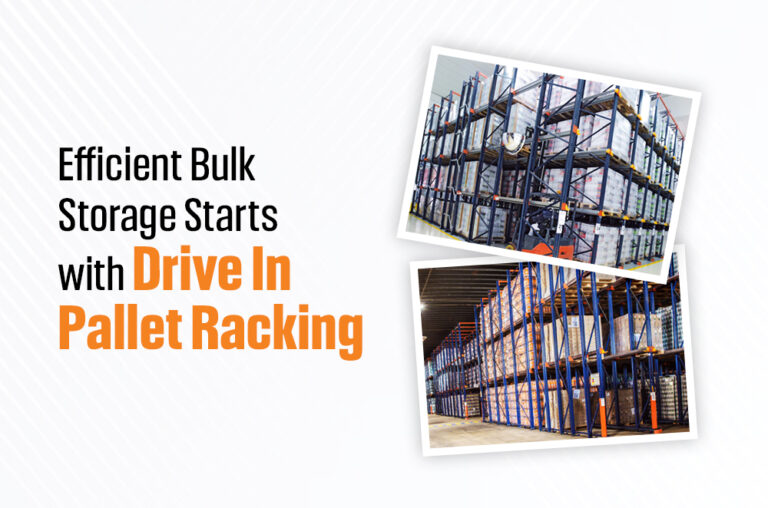
Introduction to Drive-In Pallet Racking Drive in pallet racking is designed to maximize the warehouse space and allows for driving directly into the storage lanes. Each pallet has its own dedicated access area with a compact structure and creates high-density storage. The ideal choice for businesses which can store large quantities of products and make the most of limited floor space. It operates based on the principle of the Last-In, First-Out (LIFO), so the last pallet placed can be retrieved first. It is perfect for storing goods that do not require strict rotation and provides a long shelf life. Supported with upright frames and horizontal rails. These racking solutions are beneficial for warehouses and improve the capacity of the storage and provide immediate access to every pallet. It eliminates multiple aisles when compared to conventional selective racking systems, gives high space utilization and reduces energy costs. It has proven to be a reliable choice for heavy storage applications, combining the strength of a structural design. Has operational efficiency without the need for major organization expansions and offers an affordable solution for the industry. How Drive-In Pallet Racking Works Drive in pallet racking operates on a straightforward yet highly efficient principle designed for maximum space utilization. The system consists of continuous lanes of storage racks with guide rails that allow forklifts to drive directly into the structure to load or retrieve pallets. This eliminates the need for multiple access aisles and significantly increases storage density. In a drive-in racking setup, pallets are supported by rails that run along the depth of each lane. Forklift operators place the pallets onto these rails starting from the deepest position and working outward toward the entrance. This design makes drive in pallet racking especially effective for storing large volumes of identical products where inventory turnover is predictable. The reduced number of aisles not only maximizes floor space but also minimizes travel time for forklifts, improving overall operational efficiency. Advantages of Drive-In Pallet Racking Maximized Storage Density One of the main advantages of drive in pallet racking is its exceptional storage density. By eliminating the need for multiple aisles, this system allows pallets to be stored deep within the racks, making full use of available floor and vertical space. Businesses with limited warehouse area benefit greatly from this high-density storage, enabling them to store more products without expanding their facility. This capability is especially valuable for industries where land costs are high, and space utilization can significantly impact overall profitability. Whether in a retail distribution center or a manufacturing plant, this system ensures every cubic meter is put to effective use. Cost Efficiency for Businesses Drive in pallet racking is a cost-effective choice for companies seeking maximum storage capacity with minimal investment. The system’s simple yet robust design means fewer aisles and more space dedicated to inventory. This optimization reduces operational costs, particularly for businesses handling large quantities of uniform products. By avoiding the expense of constructing new storage facilities or leasing additional warehouse space, companies can focus their capital on core operations. Over time, the savings generated from improved space efficiency and reduced facility costs contribute to higher profit margins and a stronger return on investment. Ideal for Cold Storage Facilities Cold storage and freezer facilities have high operating costs due to temperature control requirements. Drive in pallet racking is ideal in these environments as it maximizes space usage, reducing the volume of air that needs cooling. This efficiency leads to significant energy savings while ensuring products are stored in optimal conditions. For perishable goods like meat, dairy, or frozen vegetables, the dense storage layout helps maintain consistent temperatures across the stored inventory. As a result, businesses not only save on energy but also reduce product spoilage, which further adds to overall operational efficiency. Strong and Durable Structure Built from high-quality steel, drive in pallet racking systems are designed to withstand the heavy loads and frequent forklift operations typical in busy warehouses. Their durability means they can handle years of use without significant wear, making them a reliable storage solution for industries like food, beverage, and manufacturing. Additionally, the sturdy design reduces the likelihood of structural damage, lowering repair and maintenance costs over time. Businesses operating in demanding environments, such as automotive parts storage or heavy goods distribution, particularly appreciate the strength and resilience that these systems offer. Key Factors to Consider Before Installation Installing a drive in pallet racking system is a strategic investment that can significantly improve storage density, but its success depends on careful planning. Before committing to installation, businesses must evaluate operational needs, warehouse layout, and long-term storage strategies to ensure the system delivers maximum value. Warehouse Layout and Space Utilization The first step is assessing your warehouse layout to determine whether drive in pallet racking is the right fit. This system works best in facilities that prioritize high-density storage over product selectivity. The layout should allow forklifts to enter and exit the racks smoothly, with adequate aisle clearance and ceiling height. Businesses should also consider whether the racking will be integrated into an existing setup or require a complete redesign. Mapping out traffic flow patterns helps prevent bottlenecks and ensures smooth movement of goods. Product Type and Inventory Characteristics Drive-in racking is most effective when used for large volumes of the same SKU or products that are not time-sensitive. If the inventory has strict rotation requirements, such as perishable goods, alternative racking systems may be more suitable. The size, weight, and packaging of goods also play a role, as heavier or fragile products may require reinforced rails or additional protective measures. Properly matching the racking specifications to product requirements ensures safe and efficient storage. Operational Workflow and Loading Patterns Understanding your warehouse’s workflow is essential before installation. Drive-in racking follows the LIFO method, so it works well for products that do not require FIFO rotation. Businesses should assess how often pallets will be loaded and unloaded, as high-frequency retrieval can increase wear on the system. Aligning loading patterns with

Request A Quote Now!

FREE CONSULTATION
+971 52 7309510

This site is protected by reCAPTCHA and the Google Privacy Policy and Terms of Service apply.
Call Now