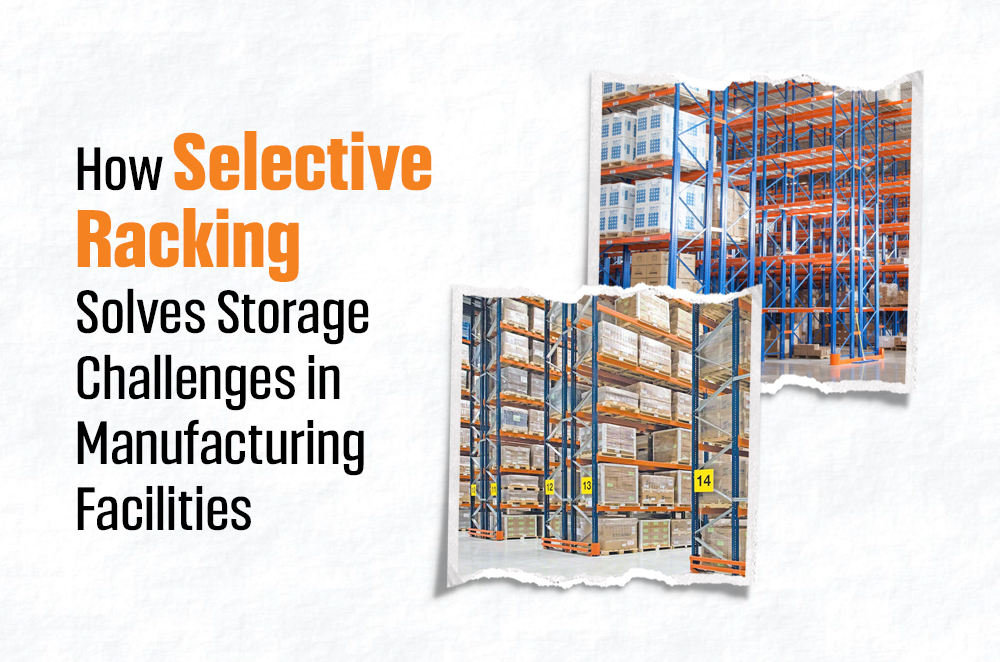
Manufacturing facilities depend on smooth material flow to keep production running without delays. However, storing raw materials, work in progress, and finished goods near production lines often becomes a challenge. Poor storage leads to congestion, material damage, and wasted handling time. These issues directly affect productivity and safety on the shop floor. Selective racking offers a practical storage solution for manufacturing environments. It allows easy access to every pallet and adapts well to changing production requirements. By organizing materials close to the production line, selective racking supports faster operations, better inventory control, and safer working conditions inside manufacturing facilities.
 Storage Challenges Inside Manufacturing Facilities
Manufacturing facilities face daily storage challenges that directly affect production flow. Raw materials often arrive in bulk and need to stay close to machines. When storage is not planned properly, these materials occupy floor space and restrict movement. Workers spend extra time locating the right material, which slows down the production process. Work in progress creates another challenge. Parts move between different stages of production and need temporary storage. Without a proper system, work in progress items get mixed or misplaced. This causes confusion, rework, and delays on the shop floor.
Finished goods also require organized storage near packing or dispatch areas. When finished products are stacked randomly, damage risk increases and loading time extends. These challenges show the need for a storage system that offers easy access, flexibility, and order. Selective racking addresses these exact issues inside manufacturing facilities.
Why Manufacturing Facilities Need an Organized Racking System
An organized racking system is essential for maintaining efficiency inside manufacturing facilities. When materials are stored without structure, production teams lose valuable time searching, shifting, and rearranging stock. This directly affects machine utilization and overall output. Disorganized storage also increases the risk of material damage, which leads to higher wastage and cost. Safety is another major concern. Floor stacking and improper storage create obstacles for workers and forklifts. These conditions increase the chances of accidents near active production lines. In addition, poor visibility of stock levels causes inventory mismatches. Production planning becomes difficult when raw materials or work in progress are not clearly tracked. Selective racking brings structure and clarity to manufacturing storage. It ensures materials remain accessible, visible, and safely stored, allowing production teams to focus on smooth operations instead of storage problems.
What Is Selective Racking and How It Works
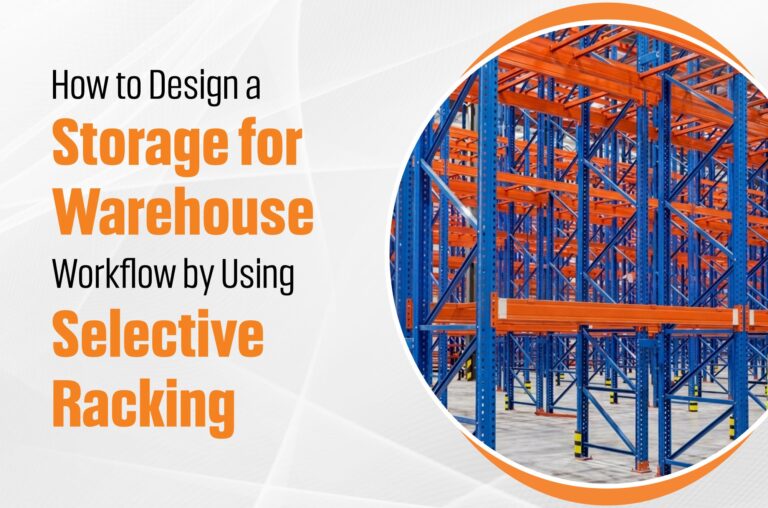
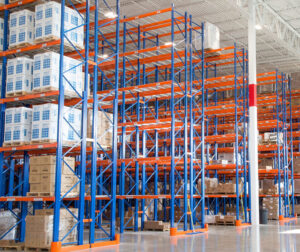
Selective racking is a storage system designed to provide direct access to every pallet. In manufacturing facilities, this feature becomes highly valuable because materials move frequently between storage and production lines. The system uses upright frames and horizontal beams to support pallets in a structured and stable layout. Each pallet position in selective racking remains independent. This means operators can retrieve or store any pallet without moving others. Forklifts can easily operate within the aisles, which keeps material handling simple and fast. Because of this accessibility, selective racking supports quick decision making and smooth production flow. Another key advantage of selective racking is its adaptability. Beam levels can be adjusted based on pallet height or material type. This flexibility allows manufacturers to reorganize storage as production demands change, without major structural modifications.
Role of Selective Racking in Manufacturing Storage
Selective racking plays a practical role in organizing materials across different stages of manufacturing. Raw materials can be stored close to production lines, which reduces travel time during material feeding. This improves workflow and helps maintain consistent production speed. Because selective racking offers direct pallet access, operators can quickly identify and retrieve the required materials.
Work in progress storage becomes more manageable with selective racking. Components waiting for the next production stage remain clearly separated and labeled. This reduces confusion and prevents mixing of parts. As a result, production teams maintain better control over ongoing processes. Finished goods also benefit from selective racking. Products can be stored neatly near packing or dispatch areas, minimizing handling delays. The system adapts easily to changing production volumes, making selective racking a reliable storage solution for manufacturing facilities.

How Selective Racking Solves Manufacturing Storage Problems
Factories are usually slowed down due to the difficulty in accessing materials. This is addressed by selective racking which provides direct access to all pallets. Employees do not have to carry other materials to access the stock they require. This reduces waiting time and maintains running production lines.
The use of space can be improved when there is selective racking rather than floor stacking. Materials are stored on the upright position in an orderly manner which frees floor space adjacent to machines. This allows the workers and forklifts to move in a safer way. Raw materials, items in progress, and finished products can also be more easily seen as a result of selective racking. Labeling prevents time wastage in decision making by the planners. Flexibility is also provided by selective racking. The change in production requirements occurs when new products or a varying batch size arises. Since the system can be changed, manufacturers are able to change storage but not to break the working process. Selective racking is a dependable option in the long term due to this flexibility.
Selective Pallet Racking for Different Manufacturing Scales
Selective pallet racking adapts to manufacturing facilities of all sizes, making it a versatile storage solution.
Small Manufacturing Units: Even facilities with limited space can benefit from selective racking. Vertical storage maximizes floor area near production lines, allowing small teams to access raw materials and work in progress without obstruction.
Medium-Scale Factories: For medium scale operations handling multiple product types, selective racking helps organize different SKUs efficiently. Operators can quickly retrieve specific pallets, reducing production delays and improving workflow coordination.
Large Manufacturing Plants: Large facilities with high volume output rely on selective racking to manage vast inventories of raw materials, WIP, and finished goods. The system allows easy reconfiguration of aisles and beams to support changing production schedules, making material handling faster and safer across the plant. Selective racking’s scalability ensures that manufacturers can grow or adjust operations without major disruptions to storage layouts.
Why Selective Racking Is Ideal for Manufacturing Facilities
Selective pallet racking is an ideal solution for manufacturing facilities because it combines accessibility, flexibility, and reliability. Its design allows every pallet to be accessed directly, making raw materials, work in progress, and finished goods quickly available for production or dispatch. The system adapts easily to changes in production schedules or inventory types. Beam heights and aisle layouts can be adjusted without major modifications, which supports evolving manufacturing needs. Compared to automated systems, selective racking is cost effective and requires minimal maintenance while still providing long term durability. By keeping materials organized and near production lines, selective racking enhances workflow efficiency, reduces labor effort, and improves overall safety. For manufacturers looking to optimize storage without disrupting operations, selective pallet racking offers a dependable, long term solution.
Conclusion
Manufacturing facilities face constant challenges in storing raw materials, work in progress, and finished goods efficiently. Delays, safety risks, and disorganized stock can disrupt production and increase costs. Selective racking addresses these challenges by providing direct access to every pallet, improving space utilization, and supporting smooth workflow near production lines. Its adaptability allows manufacturers to reorganize layouts as production demands change, while its reliability ensures long term efficiency and safety. From small workshops to large factories, selective racking enhances material handling, reduces labor effort, and supports better inventory control. In today’s rapid changes in the manufacturing environment, selective racking is not just a storage solution. It is a strategic tool that boosts productivity, safety, and operational efficiency.