Warehouses today are under constant pressure to store more products, move goods faster, and still maintain accuracy. With supply chains becoming more complex, the traditional storage methods that worked a decade ago often fall short. Companies now need solutions that not only save space but also streamline the movement of goods from one point to another. Among the modern options, shuttle racks have become a preferred choice for businesses looking to increase efficiency without expanding their floor area. These systems allow warehouses to store a higher number of pallets, reduce dependency on manual labor, and improve overall safety. For organizations where time and space are both valuable, this innovation is proving to be a game-changer.
 What are Shuttle Racks?
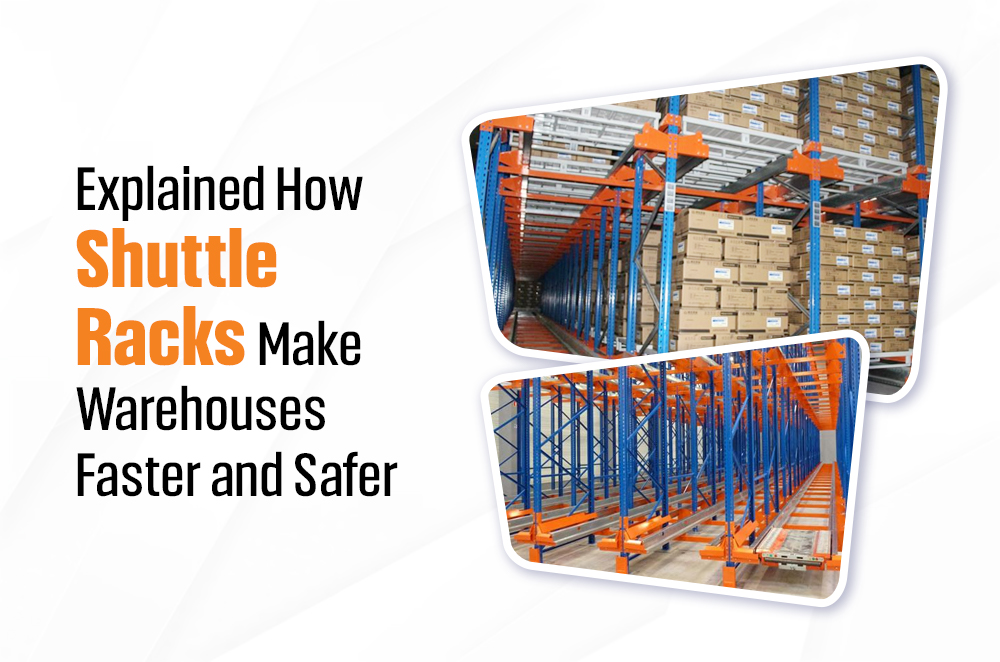
In simple terms, shuttle racks are high-density storage systems designed to maximize warehouse space while reducing the time spent on pallet handling. Instead of forklifts driving deep into the storage lanes, a motorized shuttle car takes over the job of moving pallets inside the rack structure. This shuttle is controlled through a remote or automated system, making operations faster and safer. The setup usually includes a racking framework, rails for the shuttle to move on, and the shuttle car itself. Operators only need to place the pallets at the entry point of the rack; from there, the shuttle takes over. It can position the pallet in the designated spot with accuracy and bring it back out when required.
This system is not just about convenience, it redefines how warehouses organize and manage their goods. By reducing the need for forklifts to enter every aisle, shuttle racks also help minimize congestion and lower the risk of accidents.
Evolution of Warehouse Storage Systems
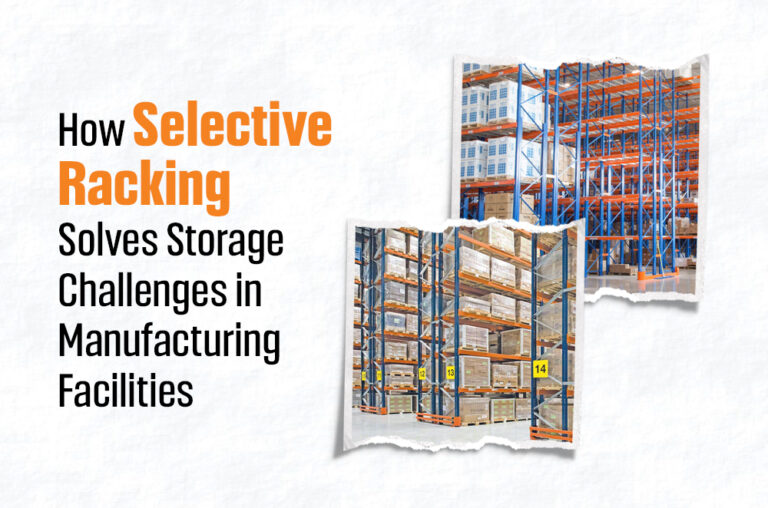
For years, warehouses relied on selective pallet racks as the most common method of storage. While this approach made it easy to access individual pallets, it consumed a large amount of space. As demand grew, businesses turned to drive-in and drive-through racks, which offered higher density but came with their own challenges. Forklifts had to enter narrow lanes, which slowed down movement and created safety concerns. The limitations of these systems became more visible as supply chains expanded. Warehouses needed to handle larger volumes, process orders quickly, and use every inch of available space. To achieve higher efficiency, warehouses started using semi-automated and automated systems.
Shuttle racks represent the next step in this progression. By combining automation with smart design, they allow warehouses to increase capacity without sacrificing speed. This shift shows how storage solutions have evolved from manual processes to highly efficient systems that meet the needs of modern logistics.
How Shuttle Racks Work
The working principle of shuttle racks is straightforward, yet it makes a significant difference in warehouse operations. A shuttle moves along rails that are built into the racking system. Forklifts place pallets at the entrance of the lane, and from that point the shuttle car transports the pallet to its designated location inside the rack.
When pallets are needed, the shuttle moves them to the front for a forklift to pick up. This process eliminates the need for forklifts to drive deep into the lanes, which saves both time and fuel. The system can handle pallets in either FIFO (first in, first out) or LIFO (last in, first out) order, depending on the requirements of the warehouse. Operators control the shuttle through a remote device, while in more advanced setups, the entire process can be automated. The combination of precise movement, reliable technology, and flexibility makes this system efficient for warehouses of different sizes.

Shuttle Racks vs. Traditional Racking
Warehouses have long depended on conventional storage systems such as selective racks and drive-in racks. While these methods served their purpose for many years, modern operations demand greater speed, efficiency, and space utilization. Shuttle racks bring a fresh approach by addressing the challenges that older systems struggle with.
Space Utilization
Traditional selective racks offer easy access to every pallet, but they consume large amounts of floor space. Drive-in racks increase density, yet forklifts must enter narrow aisles, which limits both speed and safety. Shuttle racks combine the best of both worlds. They allow high-density storage without requiring forklifts to drive deep into the racks, making better use of vertical and horizontal space.
Speed of Operations
In traditional systems, forklifts handle all pallet movement. This slows down the process as drivers must carefully navigate aisles. With shuttle racks, pallet transport inside the lanes is handled by the shuttle car, significantly reducing travel time. This leads to faster loading and unloading, which is especially valuable in time-sensitive industries.
Labor and Safety
Older racking systems require more manual effort, which increases fatigue and safety risks for workers. Forklift accidents are also more likely when vehicles move in tight lanes. Shuttle racks reduce these risks by limiting forklift entry, while workers take on supervisory roles instead of heavy physical tasks.
Cost and Scalability
At first glance, traditional racking appears to be a lower-cost option since it involves less technology. However, over time, the benefits of shuttle racks often outweigh the higher initial investment. The system improves productivity, lowers labor costs, and minimizes damage to goods. Moreover, it is scalable, which means warehouses can expand capacity without replacing the entire system.
Compared Table
|
Feature |
Traditional Racking |
Shuttle Racks |
|
Space Utilization |
Moderate to low |
High-density storage |
|
Speed of Operations |
Slower, forklift dependent |
Faster with automated shuttle car |
|
Labor Requirement |
Higher manual involvement |
Reduced manual effort |
|
Safety |
Higher accident risk |
Improved safety, less forklift use |
|
Scalability |
Limited expansion options |
Flexible and scalable |
In short, shuttle racks are not just an upgrade but a transformation in warehouse storage strategy. They solve long-standing problems with traditional methods and help businesses prepare for future growth.
Why Businesses are Choosing Shuttle Racks Today
The shift toward smarter storage solutions is not just a trend. It is a response to the growing demands of modern supply chains. Businesses today must deal with larger product ranges, tighter delivery windows, and higher customer expectations. Traditional storage systems often struggle to keep up with these challenges, which is why many companies are turning to shuttle racks. One key reason is the growing shift toward automation. Warehouses now view it as essential for staying competitive rather than a luxury.
Shuttle racks offer a semi-automated approach that strikes the right balance between efficiency and cost. They allow companies to store more, move goods faster, and keep labor requirements manageable. Another factor is resilience. After the disruptions seen in recent years, companies now realize the importance of building flexible and future-proof operations. Shuttle racks help achieve this by offering scalability. A warehouse can expand its capacity without redesigning its entire layout, making it easier to adapt as demand grows. In short, businesses are choosing shuttle racks not just for immediate benefits but also for long term stability and growth.
Conclusion
Warehousing has always been about striking a balance between space, speed, and safety. As product volumes rise and customer expectations grow, traditional methods are no longer enough. Shuttle racks provide a solution that addresses these needs with efficiency and flexibility. They allow companies to use their space better, reduce labor pressure, and maintain safer operations while preparing for future growth. For businesses that want to stay competitive, investing in smarter storage is no longer optional. Shuttle racks show how technology can transform warehouse management, turning challenges into opportunities. By adopting them, companies are not just improving daily operations but also building a strong foundation for the future.